Turmeric Vegetable Soup with Cauliflower
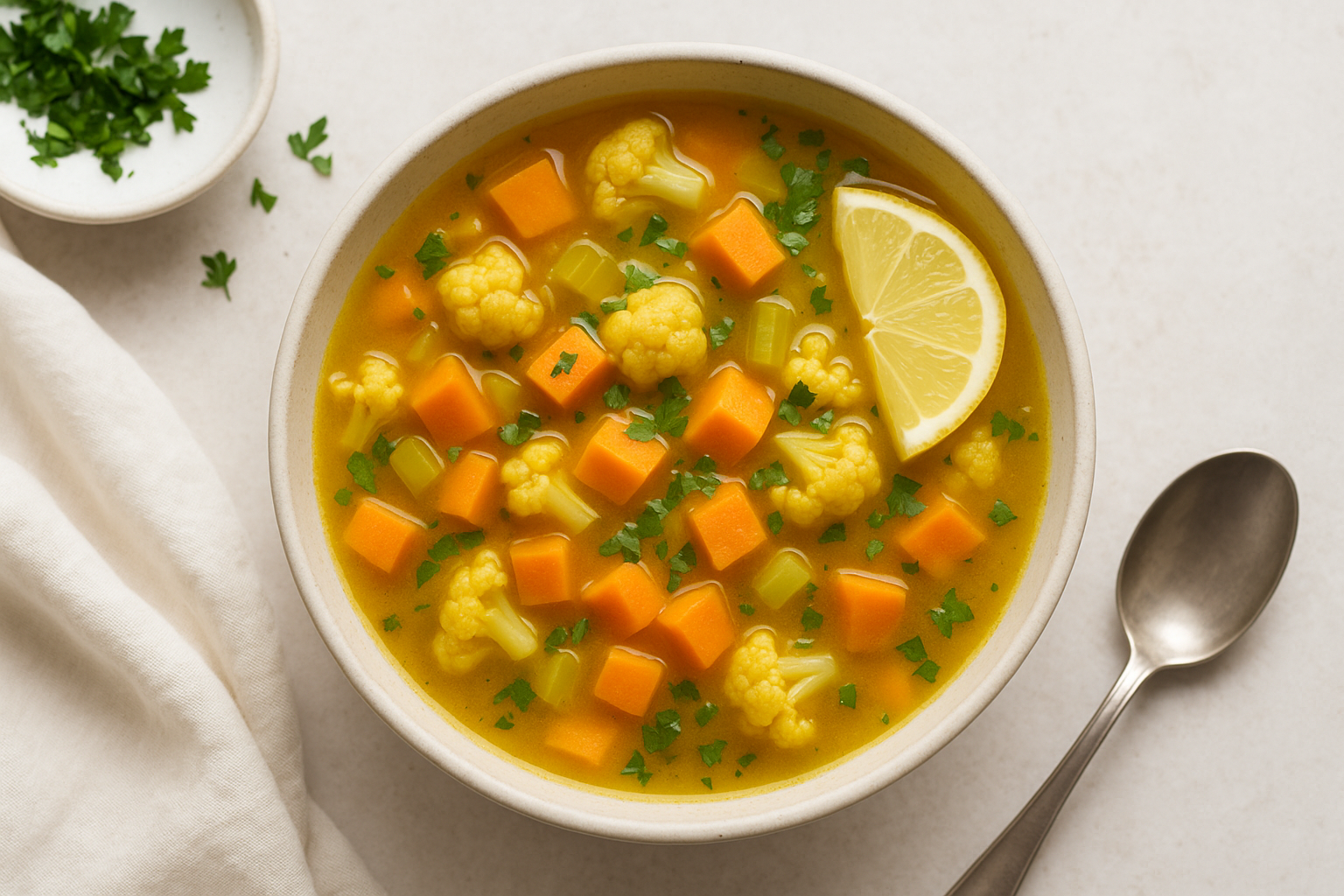
Image created for The Nutrient
A simple, whole-food turmeric vegetable soup that fits anti inflammatory recipes and practical cooking for soup season.
Sweet potato and cauliflower form the base of this vegetable soup, with turmeric and ginger adding earthy warmth. A gentle simmer keeps the method simple, and a fresh finish prevents the flavors from tasting flat.
Why this anti inflammatory recipes option works
This whole-food soup fits an anti-inflammatory eating pattern without claiming to treat disease. First, cooking the aromatics builds depth. Then, a gentle simmer lets flavors blend while preserving texture. Finally, citrus and fresh herbs added at the end keep the finished soup bright.
Ingredients
Original recipe (1×) yields 4 servings
- 1 tablespoon extra-virgin olive oil?
- 1 yellow onion, diced
- 2 carrots, diced
- 2 celery stalks, diced
- 3 garlic cloves, minced
- 1–2 teaspoons grated fresh ginger and turmeric (or 1/2–1 tsp ground each)
- 1 medium sweet potato, peeled and cubed
- 1 small head cauliflower, chopped
- 6 cups homemade or minimally processed broth
- 1 teaspoon cumin or thyme, optional
- Sea salt and black pepper, to taste
- Fresh lemon or lime juice and chopped herbs for finishing
Instructions
- Sauté onion in olive oil over medium heat until translucent. Add garlic, ginger, and turmeric; cook briefly to release aroma.
- Add chopped sweet potato and cauliflower, stir to coat with aromatics.
- Pour in broth, bring to a gentle simmer, and add cumin or thyme if using.
- Simmer until vegetables are tender, leaving some texture, usually 12–20 minutes.
- Finish off heat with lemon or lime juice, parsley, and a drizzle of olive oil. Taste and adjust salt.
Serving ideas
Serve the soup with a leafy salad, roasted vegetables, or a whole-grain side. Additionally, add avocado, pumpkin seeds, or extra herbs at the table for texture. For example, a spoonful of plain yogurt or a handful of cooked lentils boosts protein and creaminess. When using store-bought broth or rotisserie chicken, taste before salting.
Nutrition perspective
A nutritious eating pattern depends on overall diet, not a single ingredient. These vegetables, legumes, herbs, and lean proteins add fiber, protein, and micronutrients to a meal. Therefore, use this soup as one practical choice among others, and do not present food as a substitute for medical treatment.
Storage
Cool leftovers promptly, then refrigerate for up to four days. Reheat until steaming. Freeze bean- or vegetable-based soups without delicate garnishes for up to three months. Finally, discover more seasonal recipes and practical tips at The Nutrient.
Nutrition Facts
Estimated nutrition per serving
% Daily Value*
- Total Fat
- 6 g
- Saturated Fat
- 1 g
- Total Carbohydrate
- 44 g
- Dietary Fiber
- 13 g
- Total Sugars
- 7 g
- Protein
- 16 g
- Sodium
- 520 mg
YOUR FEEDBACK
Was this page helpful?
Your answer helps us improve our recipes and guides.